Personal Development
- Increased empathy & compassion
- Enhanced cultural awareness
- Improved communication & teamwork Skills
- Boosted confidence & independence
- Stronger sense of purpose & responsibility

We offer students the opportunity to learn through meaningful relationships with people, culture, and place. Living alongside Indigenous Maya communities, participants gain insight into ancestral traditions, local knowledge, and ways of life deeply connected to the natural environment.
Guatemala is one of Latin America’s most culturally diverse countries and home to a vibrant Maya population whose languages, traditions, knowledge and connection to the land continue to shape life today.
This educational journey invites students to learn with communities rather than simply about them. Based primarily in the Maya Tz’utujil community of Santiago Atitlán on Lake Atitlán, students explore Maya history and contemporary life through direct exchange with community members, artisans, local leaders and environmental educators. Through field visits and hands-on activities, students discover themes including cultural identity, biodiversity, land stewardship, reforestation and the lasting impact of Guatemala’s history. They also collaborate with community-led initiatives, working alongside local professionals on projects responding to locally identified priorities.
Reflection and dialogue are woven throughout the programme, helping students develop intercultural understanding, empathy, critical thinking, teamwork and global awareness. More than a school trip, this is a journey of learning, exchange and reciprocity — encouraging young people to understand different perspectives, build meaningful connections and consider their own role as responsible global citizens.

Departure from the United Kingdom on an international flight to Guatemala City.
Upon arrival at La Aurora International Airport, students will be welcomed by The Labyrinth’s local team and transferred by private vehicle to the hotel. During the journey, students will have their first introduction to Guatemala, observing the urban landscape of the capital city and beginning to familiarise themselves with the country that will host them over the coming days.
In the evening, a short orientation session will introduce the educational objectives of the programme, provide practical information and discuss the cultural context of the experience ahead.

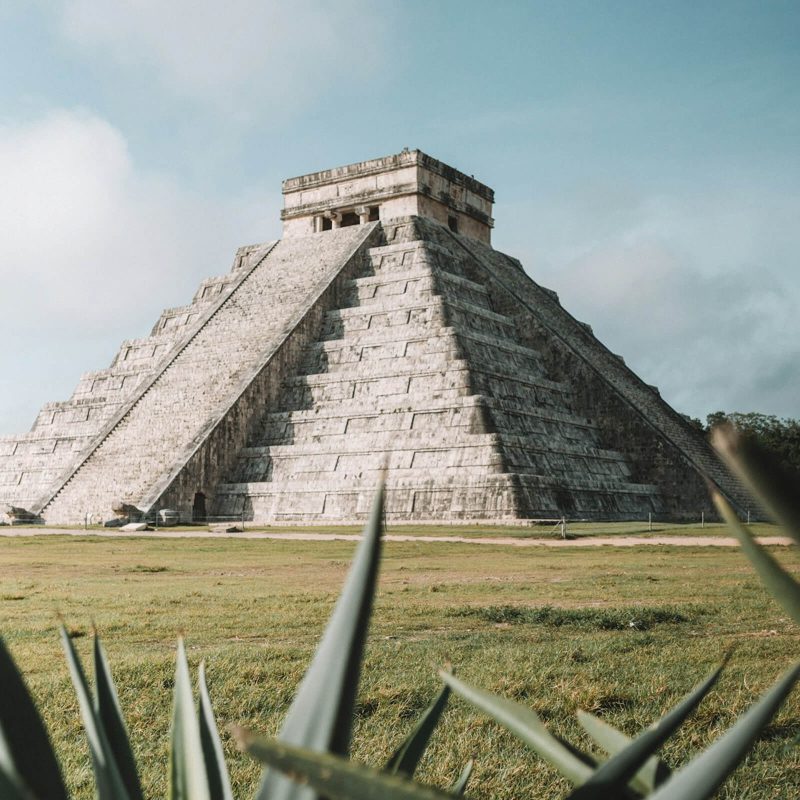
Visit to the archaeological site of Iximché, the former capital of the Kaqchikel Kingdom and one of Guatemala’s most significant archaeological sites. This will be led by an Indigenous Maya anthropologist and historian, who will guide students through the history of the Maya world, from the pre-Columbian period to the contemporary reality of Guatemala’s Indigenous communities. While exploring ceremonial plazas, temples and residential areas, students will gain an understanding of the political, social, cultural and spiritual organisation of ancient Maya city-states. The visit will also examine the processes of colonisation, Indigenous resistance and cultural continuity that continue to shape Guatemala today. Iximché remains an active ceremonial site for many Maya communities and offers a unique opportunity to understand the close relationship between archaeology, historical memory and Indigenous identity.
After lunch, the journey continues towards Lake Atitlán, arriving in the Maya Tz’utujil community of Santiago Atitlán, renowned for preserving its language, traditions and spiritual heritage.

The day will focus on understanding the cultural, historical and social context of Santiago Atitlán and the Maya Tz’utujil communities living around Lake Atitlán. Students will meet a respected community leader who will introduce the history, culture, social organisation, political dynamics and spiritual traditions of the community. This session will provide the essential context for the experiences that follow throughout the programme while fostering greater intercultural awareness.
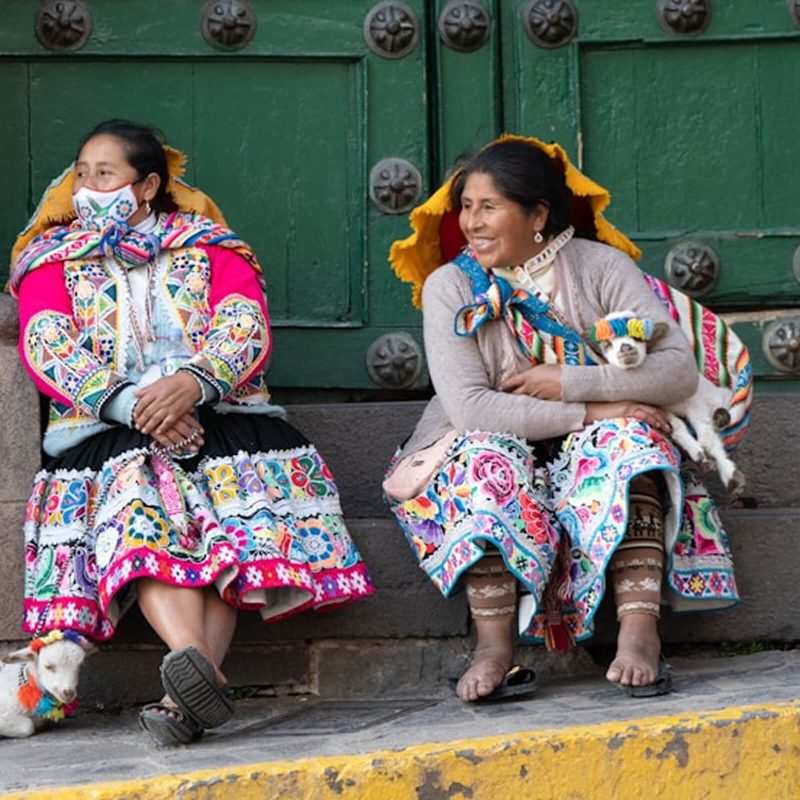
Students will then visit artisan workshops run by local women and families. By observing traditional weaving techniques, they will discover how colours, symbols and textile patterns preserve ancestral knowledge passed down through generations and continue to express Maya cultural identity today. The visit will also encourage reflection on the importance of traditional craftsmanship as both a source of economic empowerment and a means of safeguarding cultural heritage.
Students will explore Guatemala’s recent history through visits to sites of collective memory in Santiago Atitlán. Guided by local testimonies and historical narratives, they will gain insight into the profound impact of the country’s internal armed conflict on Indigenous communities, while reflecting on the continuing importance of memory, justice and reconciliation in contemporary Guatemalan society.
Before dinner, the group will visit the shrine of Maximón, one of Guatemala’s most fascinating spiritual figures. The shrine offers an extraordinary example of religious syncretism, where ancestral Maya beliefs and Catholic traditions coexist, providing students with valuable insight into the country’s rich cultural and spiritual diversity.

Students will spend the day working alongside local families and skilled community builders on a collaborative construction project designed to improve living conditions within the village. Depending on the needs identified by the community, participants may contribute to the construction or renovation of essential household spaces such as kitchens, bedrooms, sanitary facilities, roofs, or small school infrastructures.
This activity is not intended as ‘voluntourism’, but rather as an opportunity to understand how community-led development projects function through cooperation, mutual respect and the exchange of knowledge. Local builders will lead every stage of the work while explaining traditional construction techniques, locally available materials and the social importance of each intervention.
Throughout the day, students will reflect on themes such as housing inequality, sustainable development, community resilience and the role that international cooperation can play when it is guided by local priorities and leadership. By working together toward a shared objective, participants will gain a deeper appreciation of collective responsibility, social justice and the value of intercultural collaboration.

The second day of the community project allows students to deepen the relationships established with local families while continuing the construction activities initiated the previous day. Beyond the practical work itself, this experience offers valuable opportunities for cultural exchange and dialogue.
Every community carries stories worth preserving. ‘The Living Archive’ brings students and local people together to listen, record and celebrate memories, traditions and knowledge passed through generations. Created with the community, not simply about it, the archive ensures these voices remain rooted where they belong, creating meaningful connections between generations, cultures and young people.
At the conclusion of the project, the group will participate in a moment of collective reflection to discuss what has been learned through the experience and how similar principles can be applied within their own communities.

Students will explore the importance of forest ecosystems and their relationship with biodiversity, climate regulation and community livelihoods through a hands-on environmental conservation programme.
The day begins with an introduction to the ecological challenges affecting the region, including deforestation, soil degradation and the loss of native species. Working alongside local environmental educators and community members, students will learn how native tree restoration programmes contribute to protecting watersheds, preserving biodiversity and strengthening ecosystem resilience.
Participants will actively take part in every stage of the restoration process, including the collection of native seeds, species identification, seed selection, preparation of planting substrates and the propagation of seedlings in a community nursery. They will also participate in tree planting activities within designated restoration areas while learning about the ecological role of each species and the long-term management required to ensure successful forest regeneration.
Throughout the experience, students will reflect on sustainable land management, ecosystem services, climate change adaptation and the importance of community-based conservation initiatives led by local people. This activity demonstrates how environmental protection and community development are closely interconnected, highlighting the essential role that healthy forests play in supporting both biodiversity and human wellbeing.

Accompanied by local tuleros—community members who have managed these wetlands for generations—participants will discover the ecological significance of tulle (Schoenoplectus californicus), an aquatic plant that plays a fundamental role in filtering water, stabilising shorelines, providing habitat for wildlife and maintaining the ecological balance of the lake.
Students will actively participate in a tulle restoration initiative by planting new shoots in areas identified for ecological recovery. During the activity, local experts will explain the environmental challenges currently affecting the wetlands, including pollution, changing water levels and habitat degradation, while illustrating how community-led conservation efforts help preserve this unique ecosystem.
The experience also offers an opportunity to learn about the cultural importance of tulle within Maya communities. Participants will observe the traditional process of harvesting, drying and weaving the plant into petates—handcrafted woven mats that continue to play an important role in everyday life and cultural traditions throughout Guatemala.
In the afternoon, the group will travel to the UNESCO World Heritage city of Antigua, where they will settle into their accommodation before preparing for the final stage of the programme.

The final full day of the programme begins with an excursion to Pacaya Volcano, an outstanding natural laboratory for studying geology, volcanism and landscape formation. Accompanied by certified local guides, students will hike through diverse volcanic ecosystems while learning about the geological processes that have shaped Guatemala’s mountainous landscape. Along the trail, guides will explain the country’s position within the Pacific Ring of Fire, the dynamics of volcanic activity and the relationship between volcanoes, biodiversity and human settlement. Upon reaching the volcanic plateau, participants will have the opportunity to observe recent lava formations and experience one of Pacaya’s most distinctive features: the geothermal heat that continues to emerge from the volcanic rock. This unique environment provides an opportunity to reflect on the dynamic relationship between natural hazards and the resilience of communities that have lived alongside active volcanoes for generations.
After descending the volcano, the group will return to Antigua for lunch before participating in a guided walking tour through the city’s historic centre. As one of the finest examples of Spanish colonial urban planning in the Americas and a UNESCO World Heritage Site, Antigua offers valuable insights into Guatemala’s colonial history, architecture and cultural heritage.
The programme concludes with a final group reflection, during which students will review the experiences, knowledge and perspectives gained throughout the journey. Together they will discuss the connections between environmental conservation, intercultural understanding, community development and global citizenship, considering how these lessons can inform their future studies and personal engagement with global challenges.

After breakfast, students will transfer to La Aurora International Airport in Guatemala City for their return flight to the United Kingdom.
Although the journey comes to an end, the educational experience continues beyond the programme itself. Throughout the week, participants have engaged directly with Indigenous communities, environmental practitioners, local educators and community leaders, gaining first-hand insights into Guatemala’s rich cultural diversity and the complex social and environmental challenges facing the country today.
The programme aims not only to expand academic knowledge, but also to encourage critical thinking, intercultural understanding, environmental responsibility and active global citizenship – skills and perspectives that students can carry forward into their future education, careers and personal lives.

The group arrives in the United Kingdom, bringing to a close an educational journey that extends far beyond the destinations visited.
Throughout the programme, students have explored Guatemala through direct engagement with Indigenous Maya communities, environmental practitioners, educators and local leaders. By combining academic learning with meaningful field experiences, participants have developed a deeper understanding of cultural diversity, environmental sustainability, community-led development and the responsibilities of global citizenship.
The knowledge, relationships and reflections gained during the programme are intended to inspire continued learning long after the journey has ended, encouraging students to approach future global challenges with curiosity, empathy, critical thinking and a greater awareness of the interconnected nature of our world.